Dripping faucets, worn-out pipes, and stubborn clogs can cost Washington, D.C. homeowners a fortune in wasted water and repair bills each year. Knowing these issues inside and out—and when to call in the pros—can safeguard your home, conserve precious resources, and keep your utility bills in check. In this guide, we’ll dive deep into the root causes, key warning signs, and dependable solutions for the seven most frequent plumbing headaches D.C. residents face. You’ll discover:
- What makes faucets drip non-stop
- Why old pipes can be a health and safety hazard
- How low water pressure creeps in and how to get your flow back
- The main culprits behind clogged drains and how to tackle them
- Common toilet troubles and upgrades that save water
- The crucial role of sump pumps in our rainy climate
- When you need around-the-clock emergency help from a trusted name like The Drain Fighter
By the time we’re done, you’ll be equipped to spot problems early, handle basic upkeep, and team up with our skilled Washington, D.C. plumbing experts for solutions that last.
What Causes Leaky Faucets in Washington, D.C. Homes?

A leaky faucet is any fixture that drips or runs when it shouldn’t. These leaks usually stem from worn-out internal parts or mineral buildup in the valve assembly. When a faucet can’t seal off properly, it’s not just wasting water; it’s also speeding up corrosion and signaling deeper issues within your plumbing system.
What Are the Signs of a Leaky Faucet?
Homeowners typically notice:
- An audible drip or hissing sound after shutting off the water
- Damp spots on the sink basin or countertop
- Mineral deposits (like white calcium crust) forming around the spout
- Water temperature fluctuating unexpectedly while in use
Spotting a hidden drip behind the handle or at the base is a clear sign of valve wear, which naturally leads us to understand why those parts fail in the first place.
How Do Worn Washers and Corrosion Lead to Faucet Leaks?
Most single-handle faucets rely on rubber washers or ceramic discs to stop the water flow. Over time, these parts can:
- Harden and shrink under constant pressure
- Develop mineral deposits on their surfaces, preventing a complete seal
- Corrode, creating rough spots that prevent proper mating
These issues compromise the valve mechanism, allowing water to seep through even when the faucet is off, setting the stage for when it’s time for a repair or replacement.
When Should You Repair or Replace a Leaky Faucet?
Deciding between fixing or replacing depends on a few key factors:
- How often and how much water is dripping
- The age of the fixture (faucets older than 10 years often lack replaceable cartridges)
- The extent of corrosion within the valve body
- Whether new parts are readily available to match the existing style or finish
Replacing a cartridge or washer might cost between $50–$100 for parts and labor, while installing a brand-new fixture could range from $200–$400. Weighing these factors helps you make the most cost-effective choice.
How Does a Leaky Faucet Impact Water Waste and Bills?
A faucet that drips just once per second can waste over 3,000 gallons of water annually, potentially adding $30–$60 to your water bill each year.
Leaky Faucets and Water Waste
A faucet dripping once per second can waste over 3,000 gallons annually, leading to increased water bills and potential structural damage from moisture and mold growth.
Beyond the direct costs, constant moisture can accelerate:
- Corrosion of the sink basin
- Rotting of cabinets and countertops
- Mold growth beneath the sink
Stopping leaks restores efficient sealing, curbs waste, and protects surrounding structures from water damage. It’s a practical priority before we move on to bigger issues like deteriorating pipes.
Why Are Aging Pipes a Major Issue in Washington, D.C. Homes?
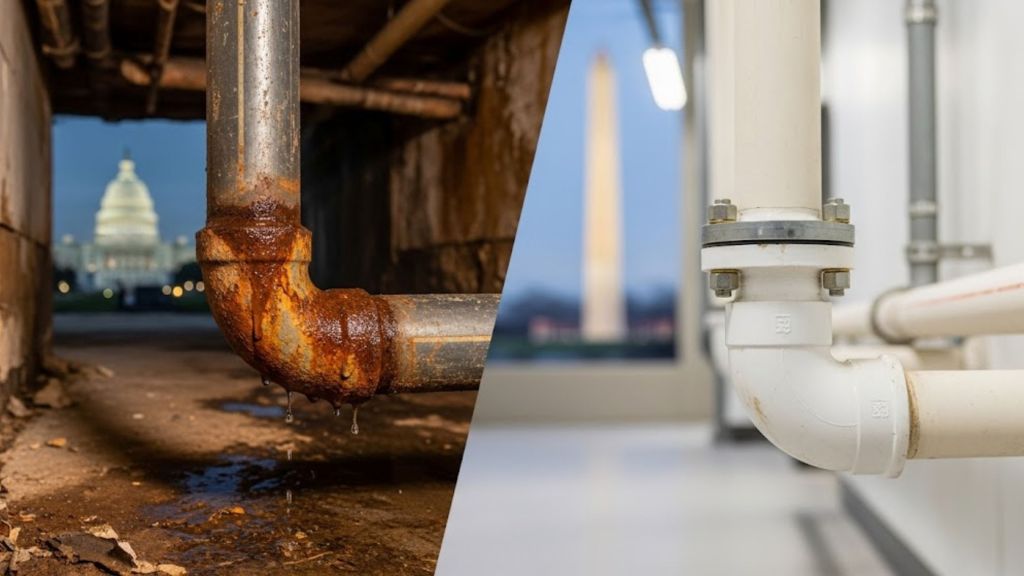
Aging pipes are a common problem when original water-supply or drain lines—often made from galvanized steel, cast iron, or even lead—begin to break down due to corrosion, scale buildup, and shifting soils. Washington, D.C.’s older housing stock means these pipe materials are prevalent and prone to failure after 50–80 years of service.
What Types of Pipes Are Common in D.C. Homes?
| Pipe Material | Characteristic | Typical Risk |
|---|---|---|
| Galvanized Steel | Zinc-coated steel | Internal rusting, reduced water flow |
| Cast Iron | Heavy, sound-dampening | Cracks, scale buildup, sewer backups |
| Lead | Soft and malleable | Lead contamination of drinking water |
| Copper | Corrosion-resistant alloy | Pinhole leaks after decades of use |
This comparison clearly shows why the type of material used significantly impacts the lifespan and replacement strategy for local plumbing systems.
How Can You Identify Signs of Pipe Corrosion or Deterioration?
Key symptoms to watch for include:
- Rust-colored water coming from your taps
- Low water pressure affecting multiple fixtures
- Water stains appearing on ceilings or walls
- Persistent clogs in drains located beneath slab foundations
Noticing any of these signs warrants a professional camera inspection to pinpoint compromised sections before leaks escalate into serious structural damage.
What Are the Health and Safety Risks of Lead Pipes in D.C.?
Lead pipes can release toxic metal into your drinking water, posing significant neurological risks, especially to children and pregnant women. While D.C. Water is actively working on replacing lead service lines, many homes still have partial or full lead lines. Certified plumbers can help by:
- Testing your water samples for lead
- Installing copper or PEX replacements
- Advising on corrosion inhibitors to minimize lead solubility
Reducing lead exposure is crucial for safeguarding your health and ensuring compliance with local regulations for safe drinking water.
What Are Your Options for Pipe Replacement or Re-piping?
Homeowners have several options for addressing aging pipes:
- Traditional open-trench re-piping for a complete replacement of all supply lines
- Trenchless pipe bursting, which inserts new pipes through existing conduits
- Point repairs to fix specific sections showing corrosion or leaks
Partnering with an experienced team like ours ensures you choose the best method based on your yard, budget, and long-term durability needs. This sets the stage for our next topic: restoring water pressure once your pipes are renewed.
What Causes Low Water Pressure in Washington, D.C. Homes?
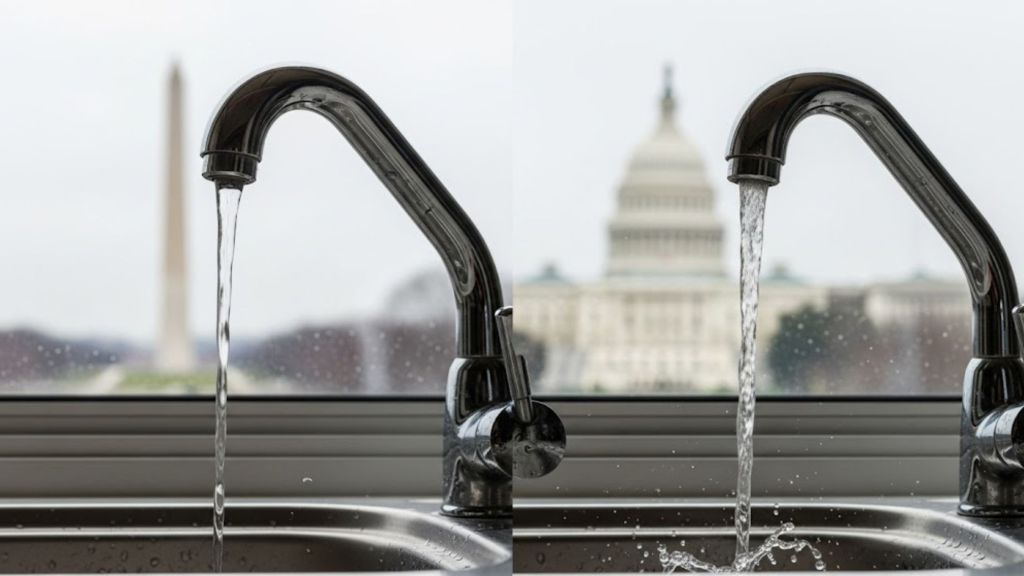
Low water pressure occurs when flow rates drop below 40 psi at your fixtures, resulting in weak showers and slow faucet output. Factors like aging infrastructure, internal pipe issues, and municipal pressure regulators all play a role in the water pressure levels throughout D.C. residences.
How Do Clogs and Corrosion Affect Water Pressure?
Scale, rust, and mineral deposits that build up inside pipes over decades narrow their internal diameter, directly reducing water volume and flow rate. When this buildup takes up more than half of the pipe’s cross-section, showers become weak, and multiple fixtures struggle to maintain adequate output. This often signals the need for professional descaling or pipe replacement.
Can Pressure Regulator Problems Lower Water Pressure?
Most Washington, D.C. homes are equipped with a pressure-reducing valve (PRV) located near the water meter. A malfunctioning PRV can cause supply pressure to drop below 30 psi if:
- The internal spring tension weakens over time
- Debris gets lodged in the valve seat
- Adjustment screws loosen
Testing and recalibrating the PRV can restore municipal line pressure to optimal levels, significantly improving overall water performance.
What Are Effective Solutions for Low Water Pressure?
To boost your home’s water pressure, consider these solutions:
- Pipe descaling – This process removes mineral layers using hydro-jetting.
- Pressure booster pumps – Installing inline pump systems can boost pressure throughout your home.
- PRV adjustment – Re-setting or replacing the pressure-reducing valve can resolve pressure issues.
- Sectional pipe replacement – This addresses severely corroded pipe segments.
Each option targets specific causes of pressure loss and fits different budget considerations, ensuring you select the most efficient restoration method.
How Can You Diagnose Low Water Pressure Issues at Home?
You can perform a few simple DIY checks:
- Measure flow rate: Time how long it takes to fill a one-gallon bucket (aim for 4 GPM or higher).
- Compare multiple fixtures: If the low output is uniform across all fixtures, it likely indicates a main line issue.
- Inspect faucet aerators: Screens clogged with debris can mimic low pressure.
- Check the PRV gauge: A pressure gauge attached to an outdoor spigot will reveal your supply psi.
When these tests suggest a systemic problem, calling a licensed plumber is the best way to ensure an accurate diagnosis and long-term solutions.
How Do Clogged Drains Affect Washington, D.C. Homes?
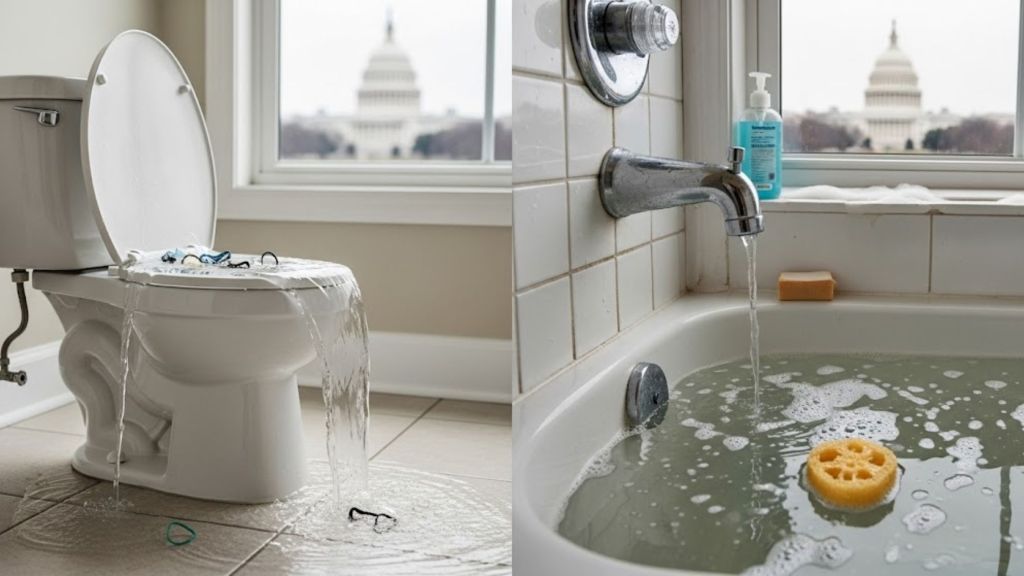
Clogged drains disrupt daily life, create unpleasant odors, and pose a risk of overflow damage. Hard water scale, grease, and debris, combined with shifting soils under slab foundations, can form stubborn blockages that require professional cleaning to clear and prevent from returning.
What Are the Most Common Causes of Drain Clogs?
Blockages in home drains typically result from:
- Hair – Tangling in shower drains and sink traps
- Grease and cooking oil – Solidifying inside kitchen pipes
- Soap scum – Combining with minerals to form sticky residues
- Foreign objects – Small items accidentally flushed down toilets
- Tree roots – Intruding into sewer lines in search of moisture
Identifying the source of each clog helps guide targeted cleaning techniques for effective clearing.
Where Do Drain Clogs Typically Occur in D.C. Homes?
Blockages frequently appear in:
- Kitchen sink P-traps, often clogged by grease
- Bathroom shower and tub drains, typically filled with hair
- Toilet drains, blocked by excessive toilet paper or foreign objects
- Main sewer lines under the lawn, where roots and soil shifting can compress pipes
Noticing recurring backups across multiple fixtures often points to a main line obstruction that requires camera inspection and advanced clearing methods.
What Professional Drain Cleaning Methods Are Available?
Certified technicians commonly use these methods:
- Drain snaking – A flexible metal auger used to manually break up blockages
- Hydro-jetting – High-pressure water streams that scour pipe walls
- Camera inspection – Real-time video to pinpoint and assess blockages
Each method is suited for different types of clogs and pipe conditions. Combining video inspection with hydro-jetting offers the most thorough cleaning and effective preventive maintenance.
How Can You Prevent Drain Clogs in Your Home?
Incorporate these regular maintenance habits:
- Install hair catchers in showers and tubs.
- Dispose of cooking oil in sealed containers, never down the sink.
- Flush drains with hot water and vinegar monthly.
- Schedule annual hydro-jetting to remove hidden scale buildup.
Consistent preventive care keeps drains flowing freely and protects pipe integrity, setting the stage for addressing toilet-specific issues next.
What Are the Most Common Toilet Problems in Washington, D.C. Homes?
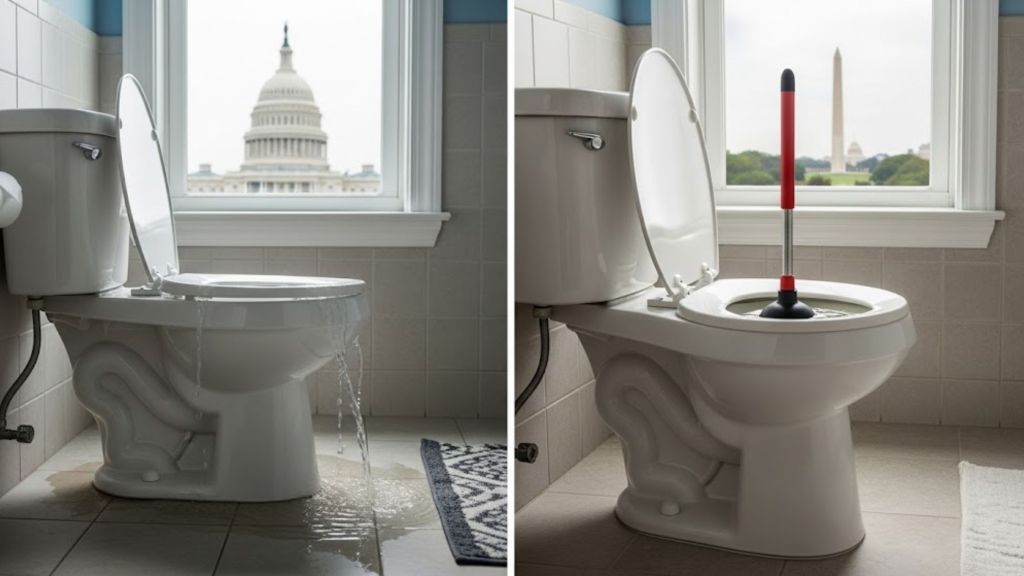
Toilets rely on multiple components working together seamlessly. When these parts fail, it can lead to running water, weak flushes, or leaks at the base. These issues not only waste water but can also cause floor damage if left unaddressed.
How Do Running or Leaking Toilets Waste Water?
A running toilet can waste up to 200 gallons of water per day, often without you even realizing it. Common signs of a leak include:
- The constant sound of water refilling in the tank
- Water pooling around the base of the toilet or on the floor tiles
- A flapper valve seal that no longer closes completely
Stopping a running toilet restores quiet operation and prevents needless water loss.
What Toilet Components Commonly Fail?
Several key parts are prone to wear and tear:
- Flapper – This rubber seal at the tank outlet can warp over time.
- Fill valve – Responsible for controlling the tank’s refill rate; mineral buildup can impair its seal quality.
- Wax ring – This seals the toilet bowl to the floor flange; it can leak when compressed or aged.
Replacing these parts typically costs less than $150 and restores reliable flush performance without needing a full fixture replacement.
How Can You Fix or Repair Toilet Issues?
Many minor toilet repairs are manageable for DIY enthusiasts:
- Turn off the water supply valve and flush to empty the tank.
- Replace the flapper or fill valve using a universal repair kit.
- Remove the toilet bowl to replace a worn wax ring.
- Reconnect the supply line and test for quiet, leak-free operation.
If you encounter complications, such as a cracked porcelain tank or hidden damage to the waste line, calling a professional ensures safe and long-lasting results.
What Are Water Conservation Tips for Toilets in D.C.?
To minimize water usage from your toilet:
- Install a dual-flush or low-flow toilet (using 1.28 GPF or less).
- Place a displacement bag in older tanks to reduce the refill volume.
- Check tank mechanisms monthly for silent leaks.
- Pair upgrades with “WaterSense” certified fixtures to potentially qualify for local rebates.
Conserving water within your home directly reduces utility costs and supports sustainable resource management.
Why Are Sump Pump Failures Critical for Washington, D.C. Basements?
In a region that averages 40 inches of rain annually, sump pumps are essential for protecting basements from flooding by managing groundwater seepage. When these pumps malfunction, even a moderate storm can lead to inundated finished spaces and ruined belongings.
What Are Common Signs of Sump Pump Malfunction?
Keep an eye out for these indicators:
- The pump motor runs continuously without emptying the pit.
- The float switch sticks or fails to activate the pump.
- Unusual grinding or humming noises occur during operation.
- Water accumulates in the sump basin instead of being pumped out.
Early detection is key to preventing basement flooding and costly restoration work.
How Does D.C.’s Climate Increase Basement Flood Risks?
Heavy seasonal rains can overwhelm yard drainage systems, saturate the soil, and raise the water table around foundation walls. Without a functioning sump pump, this can lead to:
- Water seeping through foundation cracks.
- Hydrostatic pressure forcing moisture into concrete.
- Accelerated mold growth and structural damage.
A properly working sump pump is your best defense against these climate-driven threats.
What Maintenance Practices Extend Sump Pump Lifespan?
Annual maintenance should include:
- Cleaning the pump’s inlet screen and the pit basin.
- Testing the float switch’s movement and ensuring correct settings.
- Verifying the readiness of backup battery or generator systems.
- Inspecting discharge pipes for blockages and ensuring proper grading.
Regular checks reduce strain on the motor and extend the pump’s service life, naturally leading to the question of when replacement might be necessary.
When Should You Consider Sump Pump Installation or Replacement?
It’s time to install or replace your sump pump if:
- The existing motor fails to start or cycles on and off too rapidly.
- The pit diameter is too small for a modern submersible pump.
- Basement renovations require upgraded flood prevention measures.
- Backup battery systems are absent but recommended by local code.
Consulting with professionals ensures you select the correct pump size, proper installation, and compliance with Washington, D.C. regulations for basement waterproofing.
When Should Washington, D.C. Homeowners Call an Emergency Plumber?
Burst pipes, sewage backups, and sudden loss of water supply all demand immediate professional attention. Emergency plumbing services operate around the clock to minimize property damage and restore essential utilities quickly.
What Are Typical Emergency Plumbing Situations in D.C.?
Urgent scenarios that require immediate response include:
- Burst pipes causing flooding in living areas.
- Sewer backups overwhelming basement drains.
- A complete loss of water supply due to main line failure.
- Gas line leaks near water heater appliances.
Each of these situations presents safety risks and requires rapid containment and repair.
How Does 24/7 Emergency Service Benefit D.C. Homeowners?
Having round-the-clock availability ensures:
- Fast response times to limit potential flood damage.
- Peace of mind knowing qualified technicians are available when needed.
- Transparent, flat-rate pricing with no hidden overtime or travel fees.
Choosing a local emergency plumbing team means they understand D.C.’s specific pipe systems and municipal connections, providing expert protection for your home, day or night.
What Immediate Actions Can Homeowners Take Before Help Arrives?
Before our technicians arrive, you can take these crucial steps:
- Shut off the main water valve to stop the flow of water.
- Relieve pressure in the system by opening the lowest faucet in your home.
- Turn off electricity in affected areas if it’s safe to do so.
- Contain leaks using buckets, towels, or sandbags.
These actions buy critical minutes for mitigation and complement the professional solutions we provide.
How Does The Drain Fighter Provide Emergency Plumbing Solutions in D.C.?
The Drain Fighter offers 24/7 emergency plumbing, hydro-jetting, and drain cleaning services specifically tailored for Washington, D.C. homes. Our expert technicians arrive within hours, fully equipped to handle burst pipes, sewage backflows, and no-water situations with transparent pricing and high-quality parts. For immediate assistance or to schedule an inspection, request a quote today.
To learn more about our local services and lead-free solutions, visit our Washington, D.C. page or contact our emergency line for rapid response.
In Washington, D.C., plumbing issues can range from simple leaky fixtures to aging pipe materials that compromise water quality and home integrity. By understanding the causes, recognizing the signs, and knowing the professional remedies, you can tackle problems early, conserve resources, and avoid costly damage. Whether you need routine maintenance, advanced drain cleaning, or 24/7 emergency support, The Drain Fighter’s local expertise guarantees reliable solutions and transparent pricing. Protect your home by scheduling an inspection or service—request your quote now and keep D.C. plumbing systems flowing smoothly.